Uber Driver Tax Return UK: 2026 Update for Cardiff Drivers
An uber driver tax return UK is the Self Assessment return you file with HMRC to declare your gross Uber, Bolt or private hire fares and pay Income Tax and National Insurance on the profit. For 2026/27 the simplified mileage rate has risen to 55p a mile and the Making Tax Digital threshold has dropped to £50,000, both of which change how Cardiff drivers should plan this year's return.
Published 1 October 2026 · Updated 1 October 2026
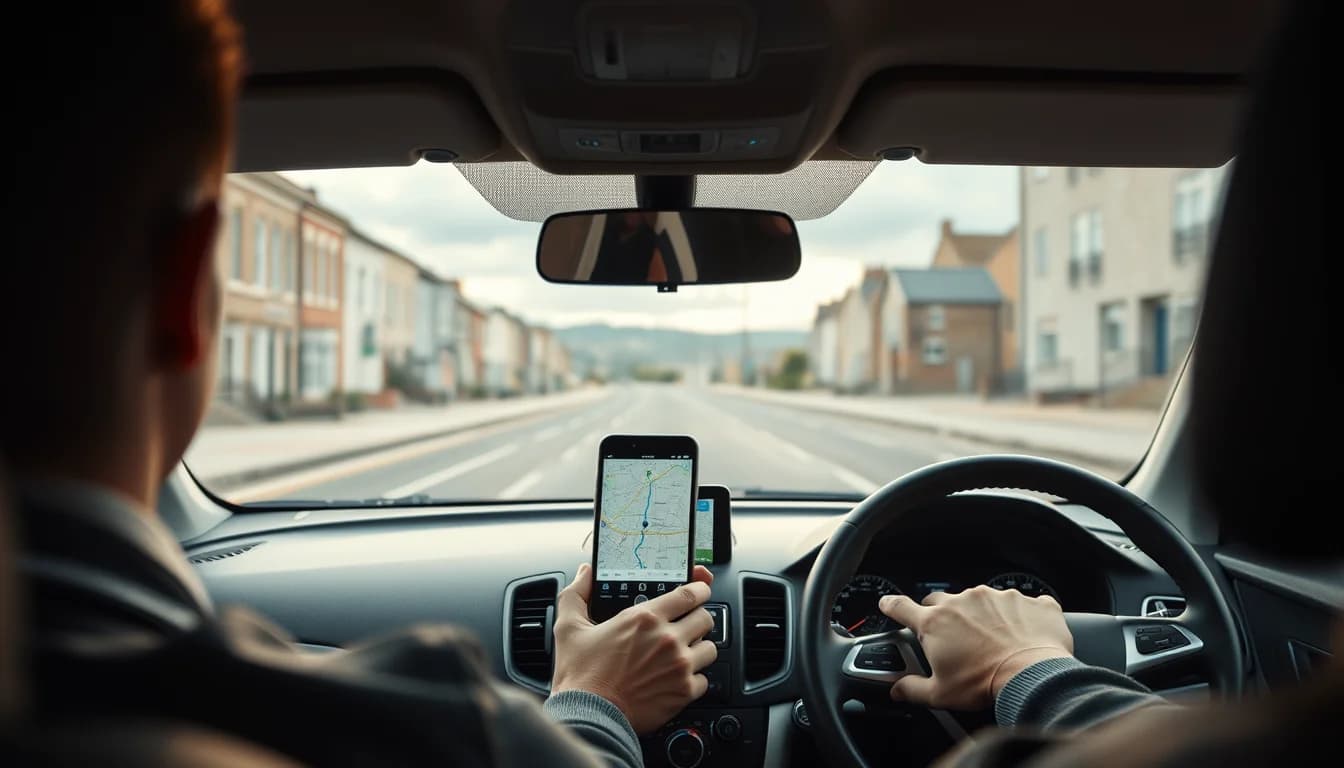
An uber driver tax return UK is the Self Assessment return every self-employed Uber, Bolt or private hire driver files with HMRC to declare gross fare income and pay the tax and National Insurance due on their profit. For the 2025/26 tax year the online deadline is 31 January 2027, and two changes for 2026/27 mean Cardiff drivers need to plan differently this year: a higher mileage rate and a lower Making Tax Digital threshold.
This guide walks through registration, what counts as income, allowable expenses under the new mileage rate, the deadlines that matter, and the Cardiff-specific detail competitor guides skip, including private hire licensing costs and the city's Clean Air Zone position.
Key takeaways
- You must register with HMRC and file Self Assessment once gross Uber/private hire income passes £1,000 in a tax year.
- From 6 April 2026 the simplified mileage rate for cars rose to 55p for the first 10,000 miles, then 25p (see the mileage section below for the source).
- The Making Tax Digital for Income Tax threshold is £50,000 gross income from 6 April 2026, falling to £30,000 in 2027 and £20,000 in 2028.
- Cardiff hackney carriage drivers are excluded from simplified mileage and must use actual costs and capital allowances instead.
- The online filing and payment deadline for 2025/26 is 31 January 2027; registration is due by 5 October 2026.
What is an uber driver tax return?
An uber driver tax return is the Self Assessment form self-employed drivers submit to HMRC each year, reporting gross fares, allowable expenses and the resulting profit, on which Income Tax and Class 4 National Insurance are calculated and paid.
Do I need to file a tax return as an Uber driver?
Yes, if your gross self-employed driving income exceeds £1,000 in a tax year, you must register with HMRC and file a Self Assessment return, regardless of how much profit you actually keep or whether you also have a PAYE job.
This applies whether you drive for Uber, Bolt, a private hire firm or as a Cardiff-licensed hackney carriage driver. Since January 2024, ride-hailing platforms including Uber have been legally required to report driver earnings directly to HMRC under digital platform reporting rules, so HMRC already has a record of what you earned — accurate, matching figures on your return matter more than ever.
New drivers must register for Self Assessment by 5 October following the end of the tax year in which they started driving. If you started driving between April 2025 and April 2026, register by 5 October 2026. For a fuller walkthrough of your first return, see first tax return for a new Uber driver and key tax dates for Uber drivers.
What counts as income on my Uber driver tax return?
You must declare gross fares before Uber's service fee is deducted, not the net amount that lands in your bank account. Uber's commission is then claimed back as an allowable expense, so the two numbers net out correctly, but reporting the net figure alone understates your income and can trigger an HMRC query.
- Gross fares and trip earnings shown on your weekly Uber statements
- Tips paid through the app
- Bonuses, incentive payments and referral fees
- Any income from other platforms (Bolt, Uber Eats, private hire work) in the same tax year
- Cash tips or cash jobs, which must still be declared in full
What expenses can I claim as an Uber driver?
You can claim any cost that is wholly and exclusively for your driving business, reducing the profit you pay tax on. The two most common approaches are simplified mileage and actual costs — see the comparison table below for which suits you.
- Uber's service fee and any Bolt or platform commission
- Fuel, servicing, repairs, MOT and vehicle insurance (if using actual costs, not simplified mileage)
- Mileage at the simplified rate, if you choose that method
- Mobile phone costs and data, apportioned for business use
- Cardiff Council private hire or hackney carriage driver licence fees, DBS check and knowledge test costs
- Dash cam, phone mount and cleaning products
- Accountancy fees
- Parking and tolls incurred during paid trips (not fines or penalty charge notices)
The 2026/27 mileage rate change
From 6 April 2026 the simplified mileage rate for cars rose to 55p per mile for the first 10,000 business miles in the tax year, then 25p per mile after that, up from the previous 45p/25p rates, according to GOV.UK's simplified expenses guidance. If you drive a standard car for Uber or private hire, this uplift can meaningfully increase your allowable deduction for 2026/27 compared with last year.
How do I file my Self Assessment tax return step by step?
Filing follows a fixed sequence: register, gather your records, calculate income and expenses, complete the online return, then pay what you owe by the deadline. Missing any step risks penalties even if your figures are correct.
- Register for Self Assessment with HMRC if you have not filed before, by 5 October following your first trading year
- Gather your Uber/Bolt weekly statements, mileage log, fuel and expense receipts for the full tax year (6 April to 5 April)
- Total your gross fare income and add any other self-employed driving income
- Add up allowable expenses, choosing either simplified mileage or actual costs, not a mix for the same vehicle
- Calculate your taxable profit and complete the Self Assessment return online via your HMRC login
- Check whether you owe a payment on account for the following year, alongside your balancing payment
- Submit the return and pay by 31 January 2027 for the 2025/26 tax year
Simplified mileage vs actual costs: which should I use?
Most standard private hire drivers do better with simplified mileage, claiming 55p then 25p per mile, because it is easier to record and often larger than itemising every receipt. Hackney carriages are excluded and must use actual costs, while higher-value vehicles or very high-mileage drivers may also do better itemising fuel, servicing and capital allowances separately.
| Method | How it works | Best for |
|---|---|---|
| Simplified mileage | 55p per business mile for the first 10,000 miles, then 25p; covers fuel, servicing, insurance and depreciation in one flat rate | Standard private hire cars with moderate annual mileage; simpler record-keeping |
| Actual costs | Claim a business-use percentage of fuel, insurance, servicing, repairs and capital allowances on the vehicle | Hackney carriages (excluded from simplified mileage), higher-value vehicles or very high-mileage drivers |
Once you choose a method for a vehicle you must generally stick with it while you own that car, so decide early in the tax year rather than at filing time. For more detail on mileage record-keeping, see HMRC mileage log records and bookkeeping and, if you trade through a limited company, mileage allowance for limited company drivers.
What is Making Tax Digital and does it affect me?
Making Tax Digital for Income Tax requires drivers with gross self-employment and property income over £50,000 to keep digital records and send quarterly updates to HMRC from 6 April 2026, replacing the single annual return for those drivers. The threshold then falls to £30,000 from April 2027 and £20,000 from April 2028, according to the Low Incomes Tax Reform Group, bringing in progressively more part-time and full-time drivers.
Gross income means fares before expenses, not take-home profit, so a driver clearing £30,000 profit could easily have gross fares above £50,000. Check your own gross figure against the threshold rather than assuming you are exempt. For a broader explanation, see Making Tax Digital explained for Uber drivers and self-assessment vs Making Tax Digital.
What are the tax rates and deadlines for 2025/26 and 2026/27?
For 2026/27, Income Tax is 0% up to £12,570, 20% up to £50,270, 40% up to £125,140 and 45% above that, per GOV.UK's income tax rates page. Class 4 National Insurance is 6% on profits between £12,570 and £50,270 and 2% above, while Class 2 is £3.65 a week, treated as paid once profits reach £7,105, according to GOV.UK's self-employed National Insurance rates.
The deadline to register for Self Assessment covering the 2025/26 tax year is 5 October 2026. Paper returns are due 31 October 2026, and online returns plus payment are due 31 January 2027, confirmed on GOV.UK's Self Assessment deadlines page. A second payment on account, where applicable, falls on 31 July.
Illustrative example: a Cardiff Uber driver's 2026/27 numbers
This illustrative example uses an invented driver, Rhys, who drives for Uber part-time around Cardiff city centre and Cardiff Bay alongside a part-time PAYE job.
| Item | Amount |
|---|---|
| Gross Uber fares for the year | £24,000 |
| Uber service fee (expense) | £5,760 |
| Business mileage: 9,000 miles at 55p | £4,950 |
| Phone, licence fee, dash cam and sundries | £650 |
| Total allowable expenses | £11,360 |
| Taxable profit | £12,640 |
| Income Tax due (profit above £12,570 personal allowance, at 20%) | £14 |
| Class 4 NIC due (6% on profit above £12,570) | £4.20 |
Rhys's figures are deliberately close to the personal allowance to show how the 55p mileage rate and licence costs reduce his bill; a full-time driver with higher gross fares would owe substantially more Income Tax and Class 4 NIC, calculated on the same bands above.
Cardiff private hire and hackney carriage licensing: what it costs and what you can claim
Cardiff Council licenses both private hire drivers (who work for Uber, Bolt or a private hire operator) and hackney carriage drivers (Cardiff's licensed taxis, which can be hailed on the street). Both routes require an enhanced DBS check, a medical declaration and a knowledge test before Cardiff Council issues a licence.
Cardiff Council's published fee structure shows separate 1-year and 3-year options for both new applications and renewals, plus additional charges for the DBS check and knowledge tests; check the current fee on Cardiff Council's taxi and private hire licensing pages, as fees are reviewed periodically. Whatever the licence costs in the year you pay it, it is an allowable business expense on your tax return, along with the DBS check and test fees.
One important difference for Cardiff's hackney carriage drivers: HMRC's simplified expenses rules specifically exclude vehicles designed for commercial use, including hackney carriages, from the simplified mileage rate covered earlier. If you drive a Cardiff-licensed hackney carriage, you must use the actual costs method instead, claiming fuel, servicing, insurance and capital allowances on the vehicle rather than a flat mileage rate.
Does Cardiff's Clean Air Zone affect my tax return?
Cardiff Council decided against introducing a charging Clean Air Zone, instead investing around £32 million in measures such as electric buses and street redesigns, so Cardiff drivers do not currently pay a CAZ daily charge as drivers in some English cities do. This means there is no CAZ charge to claim as an expense in Cardiff, unlike operators in cities that do run a charging zone, though you should check for any updates on Cardiff Council's transport pages before assuming this remains unchanged for the whole tax year.
Common mistakes on an Uber driver tax return, and the penalty each triggers
| Mistake | What happens |
|---|---|
| Declaring net Uber payouts instead of gross fares | HMRC's data from Uber may not match your return, risking a compliance check and assessment for extra tax plus interest |
| Missing the 5 October registration deadline | A 'failure to notify' penalty can apply, based on the tax due and how late you tell HMRC |
| Filing after 31 January | An automatic £100 penalty applies immediately, rising with daily penalties after three months and further charges after six and twelve months |
| Mixing simplified mileage and actual costs for the same vehicle | HMRC can disallow the claim and recalculate your profit, increasing your tax bill |
| Not keeping a mileage log or receipts | Expenses can be disallowed on enquiry if you cannot evidence them, increasing your taxable profit |
How Uber Driver Accountant helps
Uber Driver Accountant provides fixed-fee accountancy from £20 a month, built specifically for Uber, Bolt, private hire and hackney carriage drivers across the UK, including Cardiff. We are independent of Uber and Bolt and work only for drivers, handling registration, mileage records, Making Tax Digital compliance and your annual Self Assessment return so you don't have to track every rate change yourself. See our personal tax service for self-employed drivers for details.
If you're also approaching the £50,000 Making Tax Digital threshold or considering VAT registration, our Making Tax Digital service and VAT service cover both in the same fixed monthly fee structure.
Conclusion
Filing an accurate uber driver tax return UK for 2025/26 means using the current rates, not last year's, and Cardiff drivers have two local details to factor in: licensing costs that are fully deductible, and no Clean Air Zone charge to claim. Get your registration, mileage log and expense records in order well before the 31 January 2027 deadline. If you'd rather hand the whole process to specialists who already track every HMRC update, contact Uber Driver Accountant today.
Last reviewed 1 October 2026 by the Uber Driver Accountant tax team.
This article is general information, not personal tax advice. Every driver's circumstances differ, so speak to a qualified accountant before acting on it, and seek professional representation if HMRC opens a dispute or raises a penalty.
Questions drivers ask about this
Would you rather not think about any of this?
That is exactly what we are for. Send us your Uber statements and we will handle the return, the quarterly updates and the deadlines — and tell you honestly if there is a better way for you to be set up.