Self Assessment HMRC in London: Checklist for Local Drivers
A self assessment HMRC checklist tells you exactly what to register, record and file, and by when. For London private hire drivers, that checklist also needs to cover TfL licensing costs, ULEZ and the Congestion Charge alongside the usual HMRC steps.
Published 2 October 2026 · Updated 2 October 2026
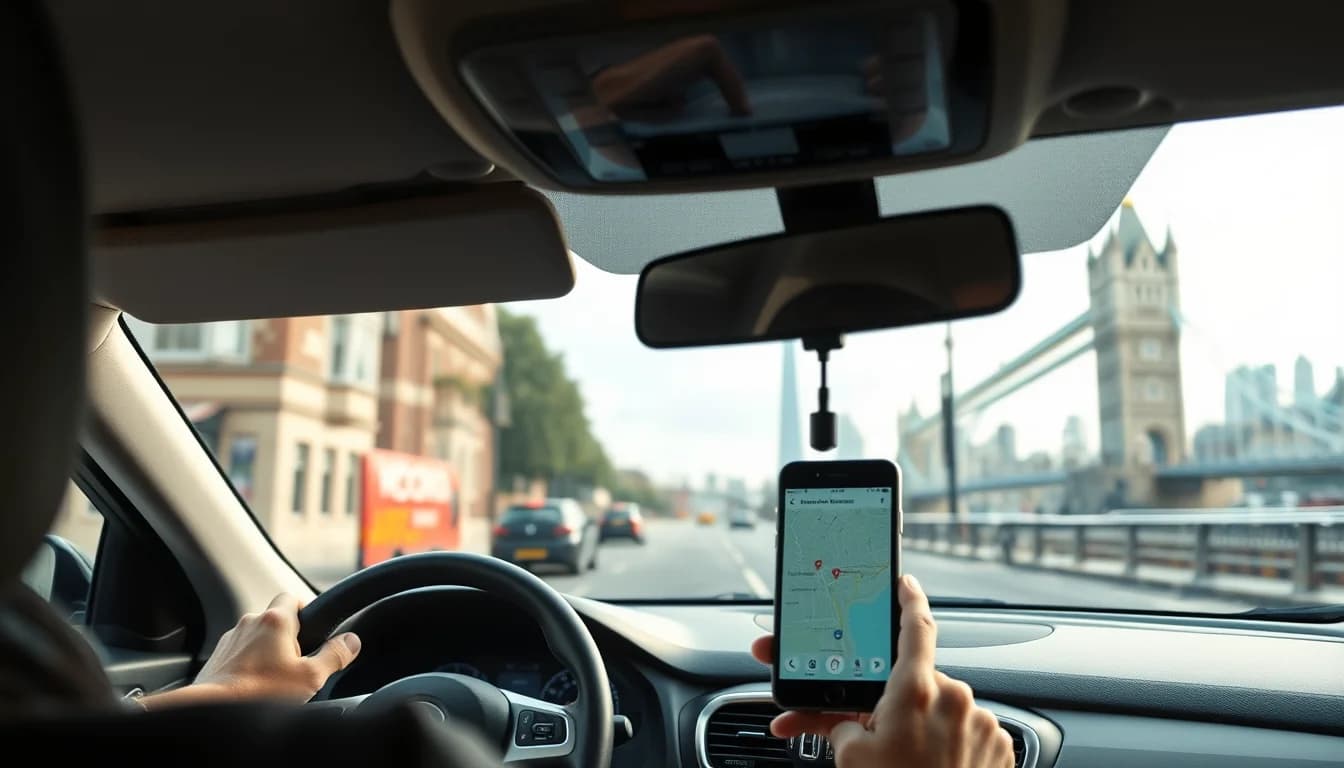
If you're searching for a self assessment HMRC checklist as a London private hire driver, you want one list that covers registration, deadlines, records and the London-specific costs that general guides skip. This article is that checklist: what to register, what to record, what to claim, and the TfL rules around licensing, ULEZ and the Congestion Charge that sit alongside your ordinary HMRC obligations.
It's built for drivers working through Uber, Bolt, FreeNow or any London private hire vehicle (PHV) operator, whether you drive full-time, part-time, or alongside employed work.
Key takeaways
- Register for Self Assessment by 5 October if you're new to self-employment or returning after a gap.
- File online and pay by 31 January; an automatic £100 penalty applies the next day if you miss it.
- Declare gross fares and bonuses before platform commission, then claim commission, fuel, insurance, your TfL PHV licence, the Congestion Charge and any ULEZ charge as expenses.
- Hackney carriage (black cab) drivers cannot use HMRC's simplified mileage rate and must claim actual running costs.
- Keep records for at least five years after the 31 January deadline for that tax year.
What is Self Assessment for a London Uber or PHV driver?
Self Assessment is HMRC's system for reporting self-employed income and working out tax owed each year. London private hire drivers report gross platform earnings, deduct allowable costs including TfL licence fees, the Congestion Charge and ULEZ charges, and pay Income Tax and Class 4 National Insurance on the profit.
Do I need to register for self assessment HMRC as a London driver?
Yes, if your self-employed turnover from driving exceeds £1,000 in a tax year, you must register for Self Assessment with HMRC. This applies whether driving is your main income or a side activity alongside employment, and whether you drive your own car or a hired PHV vehicle.
You must tell HMRC by 5 October following the end of the tax year in which you first needed to file, according to GOV.UK's guidance on registering for Self Assessment. If you've filed before but stopped for a year and restarted driving, you may need to reactivate your account through the same service rather than registering as brand new.
What are the self assessment HMRC deadlines for 2026/27?
For the 2025/26 tax year (6 April 2025 to 5 April 2026), register by 5 October 2026 if needed, file a paper return by 31 October 2026, or file online and pay by 31 January 2027. Always check GOV.UK's current deadlines page for the exact dates that apply to your tax year.
| Deadline | Date | What it's for |
|---|---|---|
| Registration | 5 October 2026 | Tell HMRC you need to file for 2025/26 |
| Paper return | 31 October 2026 | Last date to file on paper |
| Coding-out cut-off | 30 December 2026 | File online if you want tax under £3,000 collected via your PAYE code |
| Online return and payment | 31 January 2027 | File online and pay any tax owed |
What counts as taxable income for a London private hire driver?
Your taxable turnover is the gross amount passengers and platforms pay for your journeys, before any commission or service fee is deducted, plus tips, bonuses and incentive payments. Commission is then claimed back separately as an allowable business expense, not simply netted off before you declare income.
- Fares paid through the app, including surge or boost pricing
- Cash fares, where still accepted by your operator
- Tips received by card or cash
- Sign-up, referral and quest-style bonuses
- Cancellation and waiting-time fees
What can I claim as expenses, including London-specific costs?
You can claim platform commission, fuel, vehicle insurance, servicing, repairs, cleaning, your TfL private hire driver and vehicle licence fees, and, where you pay them while working, the Congestion Charge and any ULEZ daily charge. Choose either HMRC's simplified mileage rate or actual vehicle running costs, not both.
- TfL private hire driver's licence and vehicle licence renewal fees
- Congestion Charge payments made while on a paid or available-for-hire journey
- ULEZ daily charge, if your vehicle doesn't meet the emissions standard
- Phone costs for the proportion used for driving work
- Breakdown cover and dashcam costs
How does the London Congestion Charge and ULEZ affect my tax return?
The Congestion Charge and ULEZ don't change how you file; they're simply deductible running costs if paid for business journeys. Private hire vehicles are not automatically exempt from the Congestion Charge, and only wheelchair-accessible PHVs registered with TfL currently have a ULEZ grace period, so check current rates and any exemption on TfL's Congestion Charge page and TfL's ULEZ pages before assuming you qualify.
ULEZ emissions standards require petrol vehicles to meet Euro 4 and diesel vehicles to meet Euro 6; a vehicle that doesn't meet the relevant standard pays the daily charge unless an exemption applies. Most drivers using a newer PHV-compliant vehicle through Uber or Bolt already meet the standard, but it's worth checking your specific vehicle.
TfL also licenses PHV drivers and vehicles directly, separately from your tax obligations. Its private hire driver licence information covers renewal requirements, and licence fees are themselves an allowable business expense alongside these emissions and charging schemes.
What records should I keep for HMRC and TfL?
Keep platform statements, mileage logs, fuel and running-cost receipts, your TfL driver and vehicle licence documents, and proof of Congestion Charge or ULEZ payments. HMRC expects records to be kept for at least five years after the 31 January deadline for the relevant tax year, and TfL may also ask to see licensing paperwork at renewal.
Step-by-step: filing your self assessment HMRC return as a London driver
- Confirm whether you need to register, and do so by 5 October if you haven't already.
- Gather platform statements from every operator you've driven for across the tax year.
- Total your gross income, including fares, tips and bonuses, before commission.
- List allowable expenses, including TfL licence fees, Congestion Charge, ULEZ and fuel or mileage.
- Decide between the simplified mileage rate or actual vehicle costs, and apply it consistently.
- Log in to your HMRC online account and complete the SA100 return and self-employment pages.
- Check your figures against your records before submitting.
- Submit and pay online by 31 January, or arrange a Time to Pay plan if you can't pay in full.
Comparing mileage rate vs actual costs for London driving
| Method | How it works | Who it suits |
|---|---|---|
| Simplified mileage rate | 55p/mile first 10,000 business miles, 25p/mile after, per HMRC's simplified expenses guidance | Most car-driving PHV drivers wanting simpler record-keeping |
| Actual costs | Fuel, insurance, servicing, repairs and capital allowances claimed individually | Hackney carriage (black cab) drivers, who cannot use the simplified rate, and anyone with high running costs |
Illustrative example: a London PHV driver's return
Illustrative example: Priya drives for Uber in London using her own car. Over the tax year her platform statements show gross fares and bonuses of £38,000, with £8,500 of that taken as platform commission. She also paid £1,200 in Congestion Charge over the year and £420 in TfL driver and vehicle licence fees. She drove 14,000 business miles, so claims £5,500 (10,000 x 55p) plus £1,000 (4,000 x 25p) for mileage, totalling £6,500. Her taxable profit is calculated as £38,000 minus commission, Congestion Charge, licence fees and mileage, before Income Tax and Class 4 National Insurance are worked out on the result.
Common mistakes London drivers make, and the penalty each can trigger
- Declaring net income instead of gross fares before commission: can lead to an inaccurate return and a penalty for careless error if HMRC catches the understatement.
- Missing the 31 January deadline: an automatic £100 penalty applies the next day, with further daily penalties after three months.
- Not registering by 5 October: can trigger a 'failure to notify' penalty based on the tax due, in addition to late filing charges once you do file.
- Claiming both simplified mileage and actual fuel costs for the same vehicle: HMRC can disallow the double-claimed expense and raise an assessment for extra tax.
- Treating the Congestion Charge or ULEZ as always exempt for PHVs: most drivers do pay these charges, so check current TfL rules rather than assuming an exemption applies.
How does self assessment HMRC interact with Making Tax Digital?
Making Tax Digital for Income Tax is being phased in for self-employed people with qualifying income above set thresholds, moving quarterly digital record-keeping in alongside the annual Self Assessment return rather than replacing it. If your driving income approaches the threshold, read our guide on Self Assessment vs Making Tax Digital to see when MTD starts to apply to you.
Key terms
- UTR (Unique Taxpayer Reference): the 10-digit number HMRC issues when you register for Self Assessment.
- NIC (National Insurance Contributions): contributions paid alongside Income Tax; self-employed drivers typically pay Class 4 NIC on profits.
- MTD (Making Tax Digital): HMRC's digital record-keeping and quarterly reporting regime, phased in above certain income thresholds.
- PHV (Private Hire Vehicle): a licensed minicab-type vehicle, as distinct from a licensed London taxi (hackney carriage).
- POA (Payments on Account): advance payments towards next year's tax bill, based on your current year's liability.
For the general overview of London driver tax rules, see our companion piece on Self Assessment for London Uber drivers; if you're approaching the VAT threshold, read VAT registration for London drivers. For HMRC compliance letters and what to do if HMRC contacts you about past returns, see HMRC and your Uber tax return.
How Uber Driver Accountant helps
Uber Driver Accountant supports Uber, Bolt and other private hire drivers with fixed-fee accounting from £20 a month, independent of Uber or Bolt. We handle Self Assessment registration, expense categorisation including TfL licensing and Congestion Charge costs, and HMRC filing, so London drivers don't have to work through a checklist alone. See our personal tax service for drivers for details.
If HMRC has already written to you about a previous return, or you're unsure whether you've registered correctly, our HMRC support service can help you respond with confidence. Ready to get your London Self Assessment sorted? Get in touch and we'll talk you through what's needed for your situation.
Last reviewed 2 October 2026 by the Uber Driver Accountant tax team.
This article is general information, not personal tax advice. Every driver's situation is different, so speak to a qualified accountant before relying on it, and seek professional representation if HMRC opens a dispute or raises a penalty against you.
Questions drivers ask about this
Would you rather not think about any of this?
That is exactly what we are for. Send us your Uber statements and we will handle the return, the quarterly updates and the deadlines — and tell you honestly if there is a better way for you to be set up.