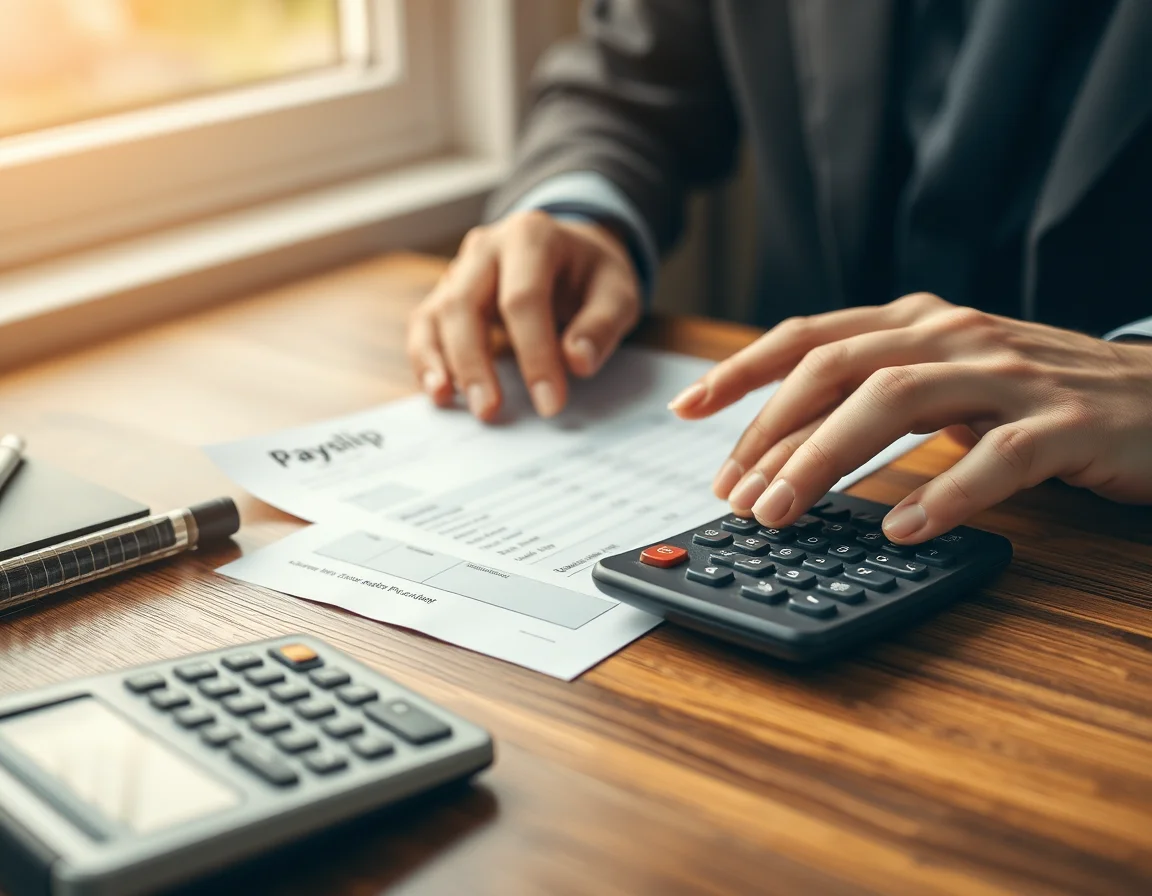
Paying Self Assessment Online in Birmingham: Step-by-Step Guide for Drivers
Paying self assessment online takes a few minutes if you have your UTR plus K reference and the money ready before 31 January 2027. This step-by-step guide shows Birmingham drivers how to pay, and how to plan cash around council licence fees and the Clean Air Zone.
Published 3 October 2026 · Updated 3 October 2026

Paying self assessment online is quick once you have your 11-character payment reference and enough cash set aside. For most Birmingham private hire drivers, the simplest route is to pay through your bank's app, or through the HMRC app, before the 31 January 2027 deadline for the 2025/26 tax year.
This guide walks Birmingham drivers through paying self assessment online, step by step. It also shows how to plan the cash around licence renewals and the Clean Air Zone, so your tax bill does not collide with your other costs. If you still need to get into your HMRC account, start with our HMRC login guide for Birmingham drivers.
Key takeaways
- Your payment reference is your 10-digit Unique Taxpayer Reference (UTR) followed by the letter K, and you should check it before you press pay.
- Paying through your online bank account or by personal debit card usually reaches HMRC the same or next day, but slower methods can take up to five working days.
- The 2025/26 balance and first payment on account are due by 31 January 2027, and a second payment on account is due by 31 July 2027.
- Birmingham drivers should treat licence fees, vehicle costs and any Clean Air Zone charges as part of the same cash-flow plan as the tax bill.
- If you cannot pay in full, contact HMRC before the deadline rather than after it.
What is paying self assessment online?
Paying self assessment online means settling your Income Tax and Class 4 National Insurance bill with HMRC through a digital route, such as your bank's app, the HMRC app, a personal debit card or online banking. You use your UTR plus K as the reference so HMRC can match the money to your record.
How do you pay your self assessment bill online step by step?
Work out what you owe, gather your reference, choose a payment route, and send the money well before the deadline. The steps below cover the fastest online route for most drivers. According to GOV.UK's guidance on paying your Self Assessment tax bill, paying through your online bank account usually arrives the same or next day.
- Check the amount. Sign in to your HMRC online account and read your Self Assessment statement. It shows the balancing payment and any payments on account.
- Find your reference. It is your 10-digit UTR followed by K. HMRC calls this the 11-character payment reference. Copy it exactly, with no spaces.
- Choose the route. The fastest options are the HMRC app, "pay by bank account" on GOV.UK, or a personal debit card. Corporate credit and debit cards may carry a fee.
- Approve the payment. If you pay through GOV.UK, you are sent to your own bank's login screen. Approve the payment there. The payee is shown as HMRC Shipley.
- Keep the confirmation. Screenshot the confirmation page or save the email. It is your proof if HMRC's record is slow to update.
- Check your HMRC account. Look at your statement a few working days later. The payment should appear and reduce your balance.
If you pay by bank transfer instead, GOV.UK lists HMRC's bank account details on its payment page, so copy them from there rather than from a social post or an email. Never send money to details you were given in an unexpected text or call.
Which online payment method suits Birmingham drivers best?
Most drivers do best with online or mobile banking, the HMRC app or a personal debit card, because these usually clear the same or next working day. Direct Debit suits drivers who want a planned, regular payment. Slower methods such as Bacs need extra days built in.
| Method | Typical timing | Good for | Watch out for |
|---|---|---|---|
| Online bank account (via GOV.UK or HMRC app) | Same or next day | Most drivers, quick one-off payments | You need your bank login to hand |
| Online or telephone banking (Faster Payments) | Same or next day | Paying from a bank you already use | Reference must be UTR plus K |
| Personal debit card | Same or next day | Last-minute payments | Personal credit cards are not accepted |
| CHAPS | Usually same working day | Large sums, urgent timing | Your bank may charge a fee |
| Bacs | About 3 working days | Planned payments | Easy to leave too late |
| Direct Debit (new set-up) | About 5 working days | Regular, automatic payments | Set it up well before 31 January |
| Cheque by post | Slowest | Rarely recommended | Must reach HMRC, not just be posted |
Our Liverpool payment guide covers the same methods in a general way. This article focuses on what is different for Birmingham drivers: the licensing calendar and the cash-flow around it.
When is Self Assessment due for the 2025/26 tax year?
Your tax bill for 2025/26 is due by 11:59pm on 31 January 2027. If you are on payments on account, the second instalment for 2026/27 is due by 31 July 2027. GOV.UK says that if the deadline falls on a weekend or bank holiday, you should check the rules for your payment method.
According to GOV.UK's deadlines guidance, online returns for 2025/26 are due by 31 January 2027. Our key tax dates for Uber drivers page lists every date in one place.
How do payments on account work?
Payments on account are advance payments towards your next tax bill, each worth half of your last bill. They fall due on 31 January and 31 July. According to GOV.UK's guidance on payments on account, you do not need to make them if your last bill was under £1,000, or if you paid more than 80% of your tax another way.
This is why many Birmingham drivers face a heavy January in their second year. The January payment can include your balancing payment for the year just ended plus the first payment on account for the new year. Plan for that jump early.
What if your income dropped?
If you expect lower profits, you can ask HMRC to reduce your payments on account through your online account. Do this only when your figures support it. Claiming too low a figure can lead to interest and penalties later. Our personal tax service can check the numbers with you first.
Worked example: a Birmingham driver planning January
This illustrative example uses invented figures to show how the cash lands. It is not a forecast of your bill.
Illustrative example: a private hire driver, described here only as "Driver A", licensed by Birmingham City Council. Their 2024/25 bill was £3,000, so each payment on account for 2025/26 was £1,500. Their final 2025/26 bill turns out at £4,200.
| Date | What is due | Amount |
|---|---|---|
| 31 January 2027 | Balancing payment (£4,200 less £3,000 already paid) | £1,200 |
| 31 January 2027 | First payment on account for 2026/27 (half of £4,200 = £2,100) | £2,100 |
| 31 January 2027 | Total due that day | £3,300 |
| 31 July 2027 | Second payment on account for 2026/27 | £2,100 |
Driver A needs £3,300 ready by 31 January 2027 and a further £2,100 by 31 July 2027. A simple habit helps: move a fixed share of each week's profit into a separate savings pot. The right share depends on your own profit, so use our tax calculator to test it.
What Birmingham costs should you plan around your tax bill?
Birmingham private hire drivers face council licensing costs and, in some cases, Clean Air Zone charges on top of tax. These are separate bills with separate deadlines. Treat them as one cash-flow calendar so a licence renewal does not eat the money you meant to send HMRC.
Birmingham City Council licence fees
Birmingham City Council licenses private hire drivers and vehicles in the city. Its published fee schedule, last updated 20 March 2026, lists a private hire driver grant (3 years) at £277 and a driver renewal (3 years) at £225. It lists a private hire vehicle grant at £196 and a vehicle renewal at £179. See the council's taxi licensing fees and charges page and check the figures before you budget, because councils review fees.
Spread over 36 months, a £225 driver renewal is roughly £6.25 a month. Vehicle costs recur more often, so ask the council how often your vehicle renewal falls due. Business licence fees are normally claimable against your profit, but check the rules in our allowable expenses guide.
The licensing tax check
When you renew a private hire driver licence, you must first complete an HMRC tax check. GOV.UK says the check asks how you pay tax on income from your licensed trade. You then receive a 9-character code for your licensing authority. Codes expire after 120 days.
The official page is GOV.UK's guidance to complete a tax check for a taxi or private hire licence. If your Self Assessment is not registered or up to date, the check can hold up your renewal. Keep your tax paid and your account in order, and the renewal is simpler.
The Birmingham Clean Air Zone
Birmingham has a Clean Air Zone covering roads within the A4540 Middleway Ring Road. The council says no vehicle is banned, but the most polluting vehicles pay a daily charge to drive inside it. Check the official Brum Breathes Clean Air Zone site for the current charge, how to pay, and whether your vehicle is compliant.
If you drive a compliant vehicle, you may not pay anything. If you drive a non-compliant one, daily charges can add up and should be in your monthly budget. Whether a charge is a business expense depends on your records, so keep every receipt.
How do you build a cash-flow plan for tax, licence and charges?
Add up your yearly tax estimate, licence fees and any Clean Air Zone charges, then divide by 12 and move that amount into a savings pot each month. Pay the tax portion into the pot first. Treat the pot as untouchable until HMRC's dates arrive.
| Cost | Yearly estimate | Monthly set-aside |
|---|---|---|
| Income Tax and Class 4 NIC (Driver A) | £4,200 | £350.00 |
| Driver licence renewal (£225 every 3 years) | £75 | £6.25 |
| Vehicle licence renewal (assuming yearly, check the council) | £179 | £14.92 |
| Clean Air Zone (if any, depends on your vehicle) | Your own figure | Your own figure |
Figures like these are only a starting point. A fixed monthly habit beats a panic in January. If you want help setting the right amount, see our pricing and speak to our team.
Can you pay self assessment in instalments?
Yes. You can spread the cost before the deadline with a Budget Payment Plan, which uses weekly or monthly Direct Debit payments. GOV.UK says you must be up to date with payments from your last bill. If you cannot pay in full by the deadline, HMRC may agree a payment plan, but it assesses whether it is affordable.
The official page on paying weekly or monthly explains that you can pause payments for up to six months, and that any overpayment can be refunded. This suits drivers whose income is steady, because small, regular payments reduce the January shock.
What happens if you pay late?
If you pay late, HMRC charges interest and may add penalties. According to GOV.UK's Self Assessment penalties guidance, late payment penalties are 5% of the unpaid tax at 30 days, at 6 months and at 12 months after the deadline. Interest is charged as well, so check the current rate on GOV.UK.
If you think you will miss the deadline, speak to HMRC before it passes. Our HMRC support service can help you prepare. If HMRC is already disputing a bill or a penalty, professional representation is sensible.
What are the most common mistakes when paying online?
The most common mistakes are a wrong reference, a late slow-method payment and forgetting the July instalment. Each can trigger interest, and a late payment can trigger a penalty. The list below shows what goes wrong and what it can cost you, so you can avoid it.
- Using the wrong reference. Leaving off the K, or using a National Insurance number, can delay matching. Check the reference before you pay.
- Paying on 31 January by a slow method. Bacs and new Direct Debits can take days, which can trigger a late payment penalty and interest.
- Forgetting the second payment on account. The 31 July instalment catches many drivers out. It carries interest if paid late.
- Mixing personal and business cash. A single pot makes it easy to spend the tax money by accident, which causes a shortfall in January.
- Falling for scams. HMRC does not ask for payment through unexpected links or texts. Go to GOV.UK or the HMRC app yourself.
- Ignoring the licence tax check. A renewal can stall if your tax affairs are not in order, which can leave you unable to drive.
Key terms
- UTR: Unique Taxpayer Reference, the 10-digit number HMRC gives you for Self Assessment.
- Payment reference: your UTR followed by K, used for Self Assessment payments.
- Balancing payment: the difference between what you owe for the year and what you paid on account.
- Payment on account: an advance payment towards next year's bill, due 31 January and 31 July.
- PHV: private hire vehicle, a car licensed for pre-booked hire.
- NIC: National Insurance contributions; Class 4 is paid on self-employed profits.
- CAZ: Clean Air Zone, an area where the most polluting vehicles pay a daily charge.
How Uber Driver Accountant helps
Uber Driver Accountant works only with drivers, on fixed fees from £20 a month, and is independent of Uber and Bolt. We prepare your return, tell you what is due and when, and help you plan the cash. See our personal tax service for what is included, and our Birmingham page for local support.
If you want to understand your bill in more detail first, our Birmingham tax return FAQ answers common questions.
Next steps for Birmingham drivers
Check your HMRC account, confirm the amount, copy your payment reference and decide today how you will pay. Then set up a monthly savings habit that also covers licence costs. If you would like a hand, contact us and we will go through your figures with you.
Last reviewed 3 October 2026 by the Uber Driver Accountant tax team.
This article is general information and is not personal tax advice. Speak to a qualified accountant about your own situation. If HMRC disputes a bill or charges a penalty, professional representation is recommended.
Questions drivers ask about this
Would you rather not think about any of this?
That is exactly what we are for. Send us your Uber statements and we will handle the return, the quarterly updates and the deadlines — and tell you honestly if there is a better way for you to be set up.