Hmrc Mileage Rates 2026: Checklist for Limited Company Clients
The HMRC mileage rates 2026 for a car are 55p a mile for the first 10,000 business miles and 25p after that, confirmed on GOV.UK for the 2026/27 tax year. This checklist walks a limited company director through what to check, log and file before the year ends.
Published 23 September 2026 · Updated 23 September 2026
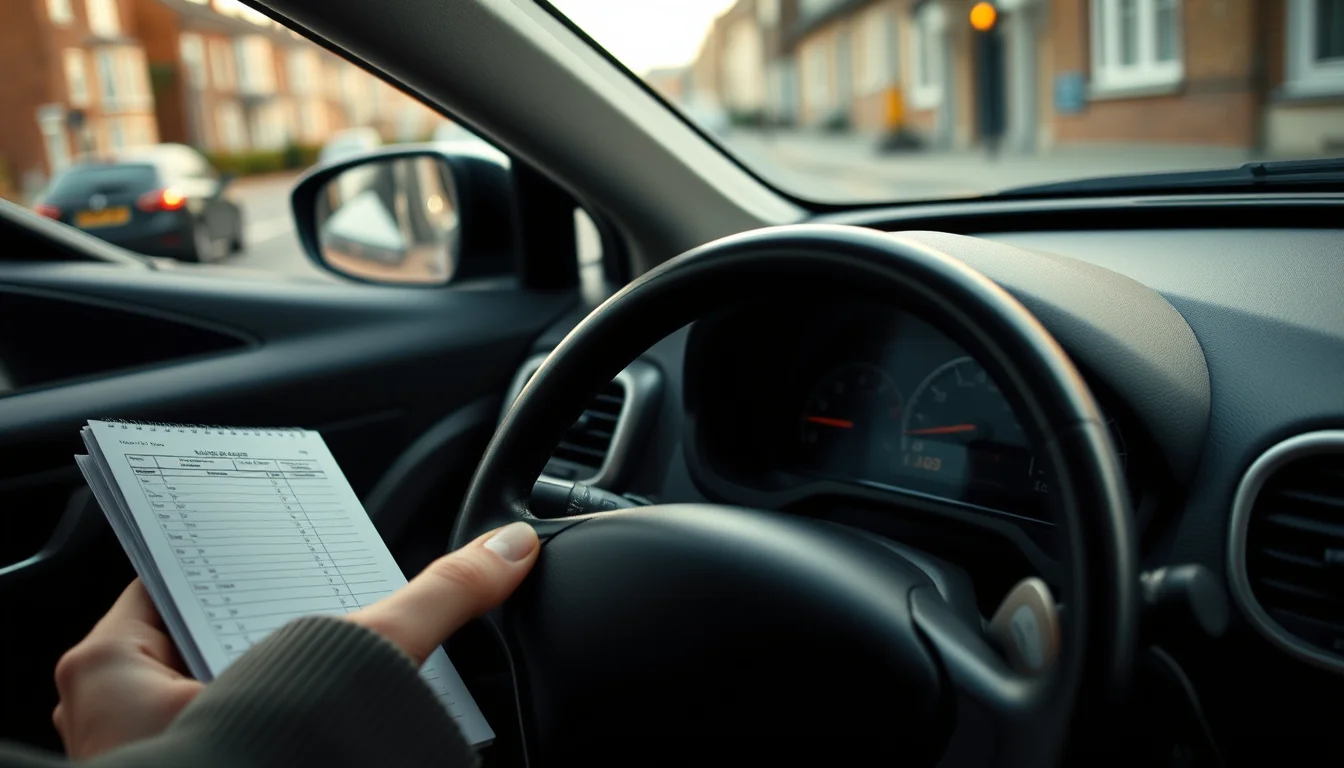
The HMRC mileage rates 2026 for a car are 55p a mile for the first 10,000 business miles and 25p a mile after that, confirmed on GOV.UK for the 2026/27 tax year running from 6 April 2026 to 5 April 2027. If you run your Uber or Bolt work through a limited company, this checklist sets out exactly what to check, log and file before you next pay yourself a director mileage claim.
This is not a general explainer of how mileage allowance works for a limited company. For the full mechanics, the AMAP versus simplified expenses comparison and the company car decision, read our companion guide on mileage allowance for a limited company driver. This piece is the 2026-specific checklist to run alongside it.
Key takeaways
- GOV.UK confirms 55p a mile for the first 10,000 business miles in a car or van for 2026/27, then 25p a mile after that, up from 45p before 6 April 2026.
- The same rate applies to a director claiming mileage from their own limited company as to any other employee, because a director is normally an employee of the company.
- Payments at or below the approved rate carry no income tax or National Insurance (NIC); go above it and the excess is taxable pay.
- Check every mileage template, app setting and standing payment for the old 45p figure before you next run a claim.
- Keep a dated mileage log for every journey. Without one, HMRC can disallow the company's deduction and treat the payment as pay.
What is the 2026 mileage rate checklist for?
It is a short list of the checks a limited company driver should run once a year, and again whenever HMRC changes a rate: confirm the current figure, update any templates, re-check the mileage log, and review the company versus own car decision.
What are the HMRC mileage rates for 2026/27?
For 2026/27, GOV.UK's guidance on rules for tax on mileage payments gives 55p a mile for a car or van for the first 10,000 business miles in the tax year, then 25p a mile after that. Motorcycles are 24p a mile and bicycles are 20p a mile, both with no mileage threshold.
This is a genuine change, not a repeat of an old figure. The car and van rate had been frozen at 45p since 2011, and GOV.UK's guidance confirms the increase to 55p took effect from 6 April 2026, the start of the 2026/27 tax year. If any mileage was paid before that date in the same tax year, the earlier 45p rate still applies to those miles.
| Vehicle | First 10,000 business miles | Miles after 10,000 |
|---|---|---|
| Car or van | 55p a mile | 25p a mile |
| Motorcycle | 24p a mile | 24p a mile |
| Bicycle | 20p a mile | 20p a mile |
There is also a passenger payment. According to GOV.UK's guidance on passenger payments, a company can pay up to 5p a mile tax-free when the driver carries another employee on a business journey. It does not cover fare-paying Uber or Bolt passengers, so it rarely applies to driving work itself.
Does the 2026 rate apply to a limited company director the same way?
Yes. A director is normally treated as an employee of their own company for mileage purposes, so the same approved rate applies. The company can pay up to 55p a mile for the first 10,000 miles and 25p after that, for a director's own car used on business journeys, without income tax or NIC on the payment.
That is different from a sole trader, who deducts a flat rate against their own profit rather than receiving a payment. If you want the fuller comparison between the two, including worked numbers and the company car question, see mileage allowance for a limited company driver and sole trader versus limited company.
The 2026 checklist: what to review before you next pay yourself mileage
Run through this list once now, and again at the start of each tax year or whenever GOV.UK updates a rate. It covers the rate itself, your records, your templates and your reporting.
- Confirm the current rate on GOV.UK's rules for tax on mileage payments rather than trusting a saved article, spreadsheet note or old email.
- Check any mileage calculator, app or template you use for the director claim, and correct the per-mile figure if it still shows 45p.
- Split any mileage paid before 6 April 2026 at the old 45p rate from mileage paid from that date at 55p, if you are catching up a claim that spans both.
- Review your mileage log for gaps: every journey should show the date, start point, destination, purpose and miles.
- Recalculate your running total for the tax year so you know how many miles remain before the 10,000-mile threshold drops the rate to 25p.
- Confirm the company has actually paid the amount claimed, either from the bank account or through the director's loan account.
- Check whether any payment this year exceeded the approved rate, and if so, flag it for payroll or P11D reporting rather than leaving it untreated.
- Revisit the company car versus own car comparison if your mileage or vehicle has changed significantly since you last reviewed it.
Our guide to mileage logs and bookkeeping records sets out what a compliant log looks like in more detail. The mileage calculator is a fast way to see your running total against the 10,000-mile threshold.
How does the 2026 car rate compare with the sole trader flat rate?
The 2026/27 figures are the same headline numbers, 55p then 25p, but they are separate schemes. AMAP is what a limited company pays a director or employee tax-free. Simplified expenses is a flat-rate deduction only a sole trader or partnership can use against their own profit; a limited company cannot use it.
According to GOV.UK's guidance on simplified expenses for vehicles, the sole trader car and goods vehicle flat rate for 2026/27 is also 55p for the first 10,000 miles and 25p after. The two schemes matching this year is not guaranteed to continue, so check each scheme's own page before assuming one confirms the other.
| Point | AMAP, limited company | Simplified expenses, sole trader |
|---|---|---|
| Who it is for | A director or employee claiming from their own company | A sole trader or partner deducting from their own profit |
| 2026/27 car rate | 55p then 25p, as an approved payment | 55p then 25p, as a flat-rate deduction |
| Available to a limited company | Yes, this is the scheme it uses | No, a limited company cannot use simplified expenses |
| Tax treatment | No tax or NIC on the individual, up to the approved amount | Reduces the sole trader's own taxable profit |
| Paying or claiming more than the rate | The excess is taxable earnings | Not applicable, since it is a fixed deduction method |
What journeys still count as business mileage in 2026/27?
The mileage rate change does not change what counts as business travel. Ordinary commuting between home and a permanent workplace is still excluded. For a driver, that generally means the pickup and drop-off journeys and time on the app count, while a fixed daily commute to one location does not.
GOV.UK's travel guidance for the self-employed sets out the general home-to-work principle, which HMRC applies in the same way to a company reimbursing an employee or director. If a particular pattern of journeys is unclear, check it with your accountant before building it into a standing claim.
What are the advisory fuel rates for company cars in 2026?
Advisory fuel rates (AFR) are separate from AMAP. They are HMRC's fuel-only per-mile figures, used when a company reimburses fuel for business trips in a company car, or when a driver repays fuel used for private trips in a company car. According to GOV.UK's advisory fuel rates, HMRC reviews these rates roughly quarterly, so always check the current table rather than an older article before applying them.
AFR only matters if the company owns or leases the car. If you use your own car and claim AMAP mileage instead, the advisory fuel rates do not apply to you.
Illustrative example: updating a director's claim for the 2026 rate
This is an illustrative example using invented numbers. Priya runs her own limited company and drives her own car for Uber and Bolt work. She is not a real person. By 5 April 2026 she had claimed 6,000 business miles at the old 45p rate, giving £2,700.
- Miles before 6 April 2026: 6,000 at 45p = £2,700
- Remaining band at the new rate: 4,000 miles at 55p to reach the 10,000-mile threshold = £2,200
- Further miles once over 10,000 in the tax year: 3,000 at 25p = £750
- Total the company can pay tax-free once the year is complete: £5,650
Priya's old spreadsheet still had 45p hard-coded for every mile. Correcting it at the checklist stage added £400 to what her company could pay her tax-free for the same 10,000 miles, simply by applying 55p instead of 45p for the miles driven from 6 April 2026. The lesson is not to assume last year's template is still right.
What mistakes come up most often after a mileage rate change?
The most common mistakes after a rate change are using the old figure by habit, mixing the two rates incorrectly across the change date, and letting the mileage log lapse while the paperwork catches up. Each can leave a claim wrong or unsupported.
- Using 45p for miles driven from 6 April 2026: understates what the company could have paid tax-free, or creates a mismatch if corrected later.
- Applying 55p retrospectively to miles driven before 6 April 2026: the excess above 45p for those earlier miles is not covered by the approved rate for that period.
- Letting the mileage log lapse during the changeover: HMRC can disallow a payment it cannot verify, treating it as taxable pay instead.
- Forgetting the 10,000-mile threshold resets each tax year: mileage does not carry over, so the higher rate always applies to the first 10,000 miles of a new tax year.
- Assuming the sole trader flat rate confirms the company rate, or vice versa: they are separate schemes that happen to match this year.
- Paying above the approved rate without treating the excess as pay: this can mean unpaid PAYE and NIC, plus interest.
If HMRC opens an enquiry into a mileage claim, professional representation is worth having from the outset. Our HMRC support service covers exactly that situation.
Key terms
- AMAP: approved mileage allowance payments, the tax-free per-mile rates a company can pay for business use of a director's or employee's own vehicle.
- AFR: advisory fuel rates, fuel-only per-mile rates that apply to company-owned cars, reviewed roughly quarterly by HMRC.
- Simplified expenses: a flat-rate mileage deduction available to sole traders and partnerships, not to limited companies.
- NIC: National Insurance contributions.
- P11D: HMRC's annual return of benefits and expenses provided to directors and employees.
- Director's loan account: the running balance of money owed between a director and their company.
How Uber Driver Accountant helps
We work only with drivers, and we charge fixed fees from £20 a month, so you know the cost before you commit. We are independent of Uber and Bolt and are not endorsed by either.
For limited company drivers we check the current mileage rate, review your log and update your director claim each time HMRC changes a figure, alongside your year-end accounts. See our limited company service for what is included, and our pricing page for the fees.
Conclusion
The HMRC mileage rates 2026 checklist comes down to a handful of checks: confirm 55p and 25p on GOV.UK, update any template still showing 45p, keep the log current, and review the company versus own car decision. None of it takes long, but skipping it can leave money unclaimed or a payment unsupported.
If you would like a second pair of eyes on your director mileage claim before the next payment run, contact us and we will go through your numbers with you.
Last reviewed 23 September 2026 by the Uber Driver Accountant tax team.
This article is general information and is not personal tax advice. Rates and rules change, and your circumstances matter. Speak to a qualified accountant before acting, and take professional representation if HMRC raises a dispute or penalty.
Questions drivers ask about this
Would you rather not think about any of this?
That is exactly what we are for. Send us your Uber statements and we will handle the return, the quarterly updates and the deadlines — and tell you honestly if there is a better way for you to be set up.